
All FAQs
Prepare your trip
Our safaris
When to visit
Booking & Payments
Health & Safety
Sustainability & Responsibility
Our company
Do I need a visa?
After you have booked your Tanzania safari or Zanzibar holiday , the next thing to do is to apply for your tourist visa. How to apply? Where to apply? What documents do you need? We have the answers to all your questions. And you will see, getting a visa for Tanzania is relatively easy.
Good to know: when travelling to Tanzania, you can either get your visa online or upon arrival.
The costs for a Tanzania visa differ slightly per nationality. Are you from Europe? Then the fee is 50 USD. Are you a US citizen? Then you need a multi-entry visa for the price of 100 USD. Both are valid for three months, but the multi-entry visa allows you to leave the country and come back again with the same visa within one year.
The amounts above apply when you purchase your visa online. If you apply for a visa upon arrival, it either costs 50 USD or 50 EUR (or 100 USD for the multi-entry visa), even though 50 EUR obviously does not equal 50 USD. You can either pay for your visa in cash or with a credit card – then the fee is 50 or 100 USD plus credit card fees. The choice is yours.
The Tanzanian government prefers you applying online, and truth be told, it does have its perks:
The process is relatively easy, especially with the explanatory PDF you get when booking through us.
You board your plane knowing your visa is arranged and paid for.
Upon arrival, you only have to wait at one counter to get your visa stamped.
To apply for a visa online, you go to the official portal of the Tanzanian government. We advise you to NOT apply through any other website because they are either more expensive or scams. We know of several travellers who lost their money through these scams, so it’s better to be safe than sorry. The official portal is: https://visa.immigration.go.tz/.
When guests book with us, a guide will help them through the process. And our travel consultants are always available for advice, too. Even though we cannot apply for your visa, we can make everything works out. If you submit your visa application online, it can take up to two weeks before your visa is processed and approved. Make sure to have a printed or downloaded version of your visa when you embark on your journey. If you apply for a visa online, you only have to queue at the immigration counter to get your visa stamped in your passport. Then you collect your bags and you’re good to go. Easy!
If, for some reason, you cannot or don’t want to apply online, you can also still apply for a visa upon arrival. Apart from some nice African bureaucracy, the process is quite easy:
You fill out an application form upon arrival at the airport (keep a pen at hand and have the address of BlueGreen Tanzania Safaris and your first lodge at the ready).
Apply at the visa counter.
Go to a second counter to pay your visa fee, and pay either in cash or by credit card.
Go to a third counter, and get the visa stamped in your passport.
Get your bags, and you’re good to go.
As you can see, if you apply for your visa on arrival, you’ll have to queue three times, while applying online means queuing just once when you arrive. So applying the old-fashioned way might slow you down a bit. But since you are in the country of “pole pole” now – which is Swahili for “long rush” – you might as well get used to it. And just between you and us : these days so many people apply online that the one queue for online applications is way longer than the three queues for a visa on arrival. So you might even be out quicker.
Nowadays, most people prefer to apply online . This way they can be sure to have the visa in their pocket before travelling. Which is understandable. If you decide to apply online, make sure to be prepared:
Apply three to four weeks before your trip, in case your application gets denied. This will give you enough time to correct the mistakes and apply again.
Have a credit card ready for your payment, or know how to make an international bank transfer.
Have a digital passport-size picture, a picture of your passport’s biodata page (max. 300KB) and a PDF of your flight ticket (max. 1MB) ready.
Make sure your passport is valid for six months upon return from Tanzania.
If children travel with only one parent, you need a written document in English with the consent of the other parent for the trip, and then you have to upload this into the system.
Make sure to have a pen at hand when arriving in Tanzania, because sometimes there is still a form they ask you to fill.
If you decide to be a bit adventurous and apply upon arrival *, don’t board the plane unprepared, either.
Carry the amount needed for the fee in cash (USD/EUR), or use your credit card.
No passport-size picture is needed.
Have a pen at hand to fill in the application form, and the addresses of BlueGreen Tanzania Safaris and the first hotel you stay in.
If children travel with only one parent, you need a written document in English with the consent of the other parent for the trip.
*Nationals of some countries need a so-called Referral Visa and are not allowed to apply upon arrival. So make sure to check that before you decide on how to apply. Also, applying for a visa upon arrival might not be possible any more in the future for anyone, so make sure to check the immigration guidelines before you leave to make sure that it’s still possible.
Travel insurance
Do I need a travel insurance?
Embarking on an African safari to Tanzania is an adventure of a lifetime. But don’t forget to pack one of the most important things: travel insurance !
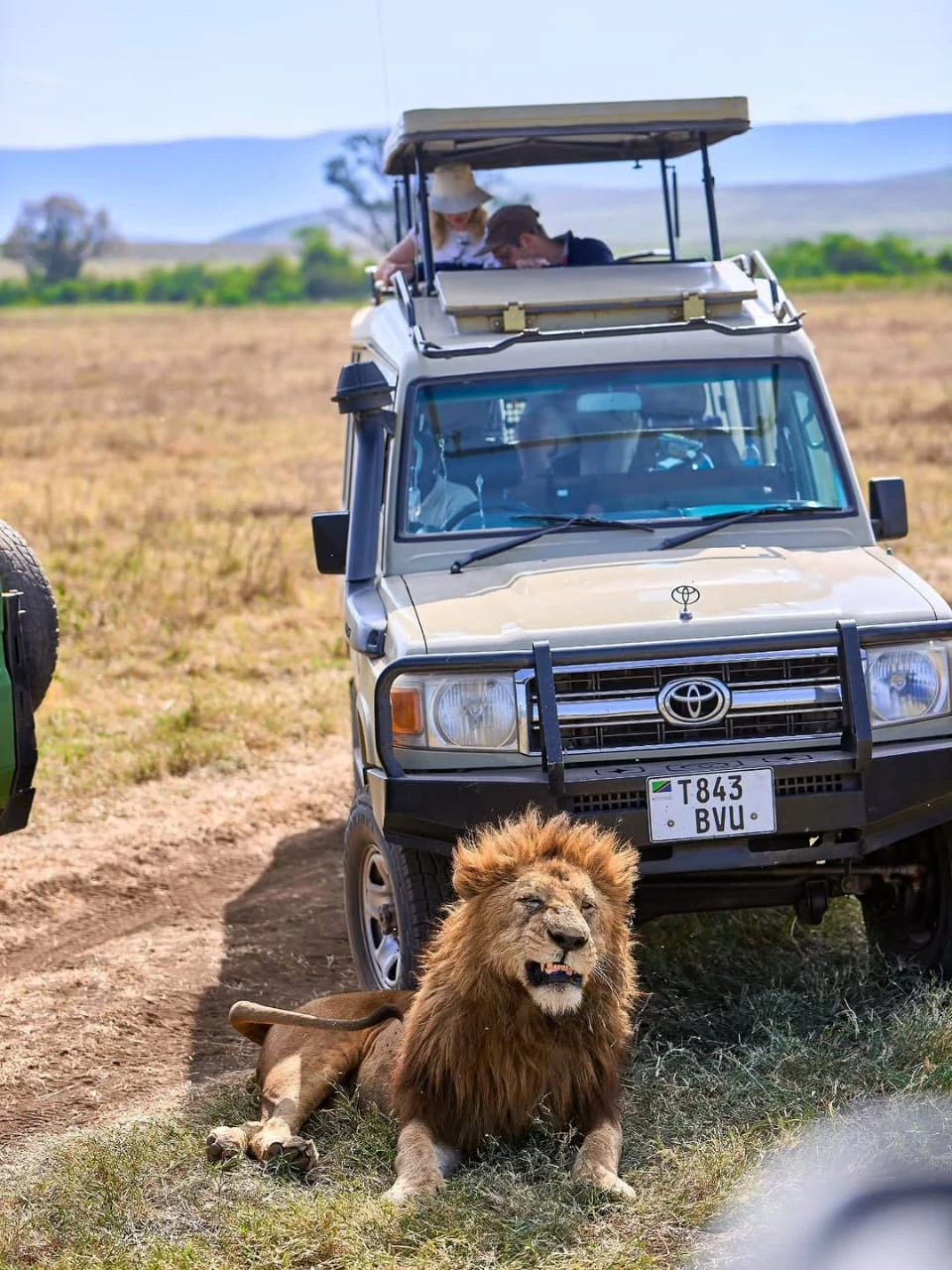
A good travel insurance plan provides peace of mind by covering medical emergencies, trip cancellations, and other unforeseen events. It’s essential to have a reliable safety net, especially in remote areas where access to medical facilities and other services can be limited. Comprehensive travel insurance lets you focus on the thrill of the safari, knowing that you’re protected against the unexpected.
We recommend Chapka Travel Insurance for your Tanzania journey. Chapka offers tailored coverage that meets the unique needs of your trip, ensuring you only pay for what you need. From 24/7 medical teleconsultation to handling lost baggage claims – Chapka’s services are designed to keep your safari experience in Tanzania smooth and worry-free.
Their personalized plans mean you’re fully covered both before and during your trip, allowing you to immerse yourself in the beauty and excitement of Tanzania without any added stress. This way you know that in the most unfortunate situations (cancellation, immediate return, hospitalization, legal fees, trip interruptions, rescue operations, and medical expenses) you are covered.
With Chapka Travel Insurance , you can embrace the adventure with confidence, knowing that help is just a call away whenever you need it.
Get a quote today and get ready for a worry-free Tanzania adventure!
Since 1 October 2024, you are obligated to obtain the Zanzibar Mandatory Travel Insurance, regardless of your own travel insurance. Each traveller needs to apply for this insurance in advance. After a payment of 44 USD per person, you receive a QR code to be shown upon arrival.
The basic coverage of this mandatory travel insurance includes the cost of emergency medical expenses, repatriation expenses (body and medical), personal accidents, baggage delays, baggage theft, baggage loss, legal expenses, and personal liabilities. To apply for Zanzibar’s Mandatory Travel Insurance, please visit https://inbound.visitzanzibar.go.tz/ .
It is advisable to sign up for a cancellation insurance. In some cases, only a portion of the cost is refunded if a long trip is cancelled. Please check this with your insurer to make sure you are properly insured.
Vaccinations
Do I need vaccinations?
In addition to standard vaccinations such as MMR and TDP, the CDC and WHO recommend vaccinations for Tanzania, such as Hepatitis A, Hepatitis B, and typhoid. Yellow fever and rabies vaccinations are also recommended depending on the traveller’s activities.
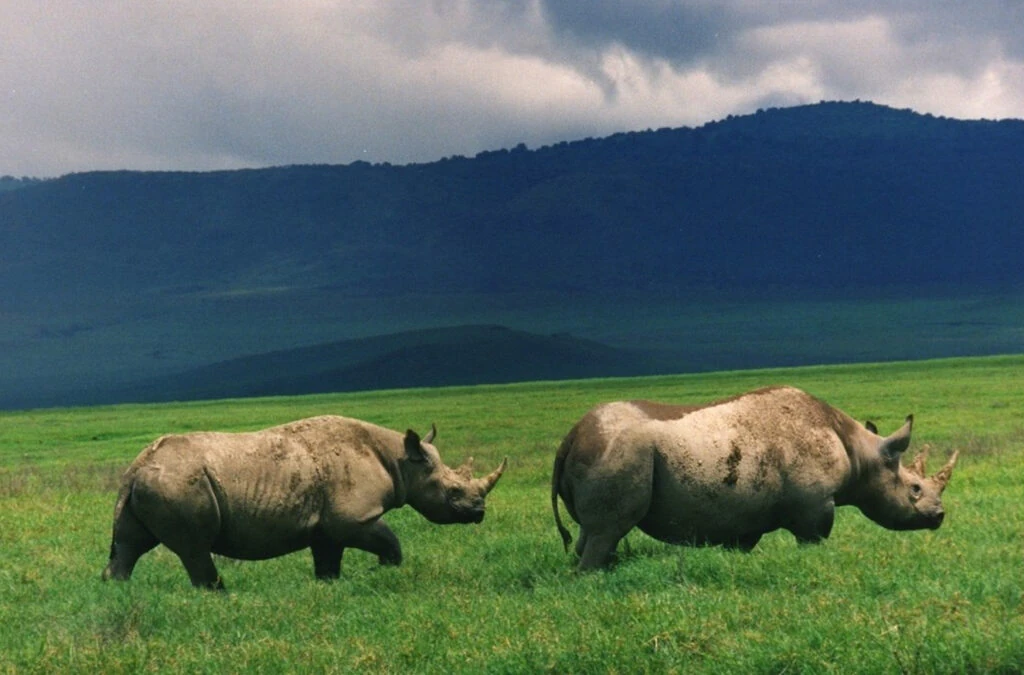
Tanzania yellow fever requirements can sometimes seem confusing, but we’re here to help! As a yellow fever-free country, Tanzania is safe to travel when it comes to steering clear of this virus. You may have questions about it, so we’ve answered them here .
What to bring
What to pack for a Tanzania safari? Your ultimate safari packing list.
Whether you are experienced when it comes to safari tours or it is your first time: it is important to know exactly what you need to bring with you. And we are here to help you out!
In the Tanzania safari packing list below, we will go through all the items you need to take with you and explain why you should bring them. Let’s get started.
Passport: This is a no-brainer, but it can sometimes be tough to remember to pick up your passport on your way out of the door. Make a note about remembering your passport somewhere that you can be sure that you will see it, such as on the fridge or on the bathroom mirror. Also, make sure that your passport has a minimum validity of six months.
Plane Ticket: Another obvious necessity, but again, it can be easy to forget them when you’re in a hurry.
Visa: E-visas are recommended as they can be arranged in advance, and they can be useful when it comes to avoiding any potential issues with obtaining a physical visa once you get to Tanzania. However, if it is necessary, they are available upon arrival in the country.
Travel Insurance: An insurance will keep you covered for issues that might pop up during your trip to Tanzania, such as cancellations, flight delays, evacuations, theft, or loss of property, and any necessary medical expenses.
It’s best to be as prepared as possible when it comes to the money that you bring with you, so a mixture of debit or credit cards as well as cash is going to be your best bet. Even though dollars and euros are still used in the most touristic places, the only official currency is the Tanzanian shilling and should be used, especially for all your small expenses.
Clothing can be a tricky element of a safari to pin down, as you never know exactly what you are going to get when it comes to the Tanzania weather .
Tanzania experiences both wet and dry seasons, with the dry seasons falling between January and February and then between June and October and the wet seasons lasting from March to May and then from November to early December.
For a safari in the dry season , you aren’t likely to see any rain, but it’s best to pack a few jackets just to be sure. Otherwise, light clothing will suffice. The wet seasons call for heavier clothes, such as scarves and thicker jackets.
There are also general clothes that you will want to make sure that you pack no matter what season you travel in, such as the following:
Long-sleeved shirts
Trousers
Shorts
Waterproof jacket
T-shirts
Socks
Warm sweaters
Swimsuits
Hats
As a whole, lightweight outfits in neutral colours are a practical choice for a safari, but remember that layering is your best friend!
You might be doing a fair amount of walking during your safari (especially if you join a walking safari) and therefore comfortable footwear is a must.
A pair of sneakers that you can get dirty is a great idea, whilst sturdy hiking boots with trustworthy ankle support are also a necessity.
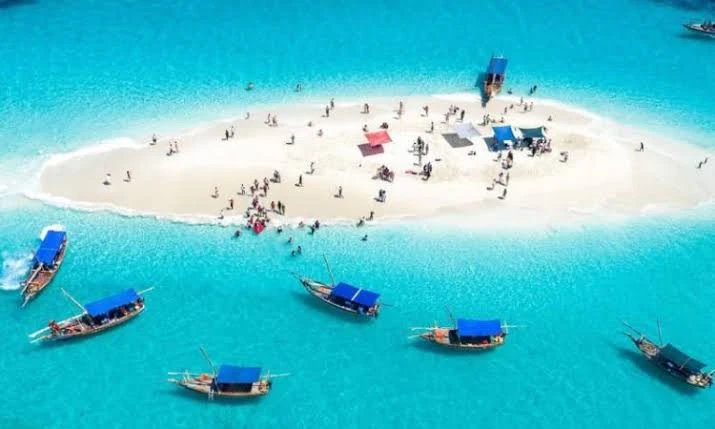
If you plan to relax at the beach as well, don’t forget your flip-flops or sandals!
A basic first aid kit will help you in case of any unexpected mishaps or illnesses during your safari.
From regular painkillers to medications to avoid sickness and diarrhoea – you want to make sure that you are stocked up on the essentials. This way, you can continue to enjoy your trip even if you have to deal with any medical problems.
Some of these essentials include:
Anti-bacterial medicines
Anti-malaria medications
Anti-diarrhoea medications
Plasters
Gauze and bandages
Adhesive tape
Hand sanitizer
Eye drops
Nose spray
Even the smallest first aid kit will do, as long as you have the right tools for any cuts, bruises, or reactions that might occur!
Toiletries
When it comes to toiletries, simply bring the same kind of items you would bring to any other holiday, such as the following:
Toothpaste
Toothbrush
Soap
Shampoo
Conditioner
Mouthwash
Deodorant
Travel towels
Hairbrush
Lotions
Feminine hygiene products (if necessary)
A safari is also a happy place for insects, so make sure you also bring some strong insect repellent in order to avoid being swarmed or bitten!
Sun Protection
You also need to keep in mind that you are going to be outside for a long period of time whilst on safari, so protection from the sun is crucial. Besides sunscreen, bring some after-sun lotion as well.
Of course, you want to capture the moments you experience during your safari for eternity. Next to a phone, a camera should be on your list of essential items.
Don’t forget the charger for your camera (that goes for your phone too!) and spare batteries, as well as an extra memory card. Universal plug converters and binoculars are a must too!
Don’t forget to keep your electronics protected at all times, especially if you explore Tanzania during the rainy season. Some extra protective coverings or waterproof bags to keep them in might prove useful.
Make sure you store all your belongings safely in matching kinds of storage. This could include the following:
Backpack
Waterproof duffel bag
Daypack
Ziplock bags
This will make it easier to decipher your everyday items from your specific safari items.
What to wear
What to wear on a Tanzania safari
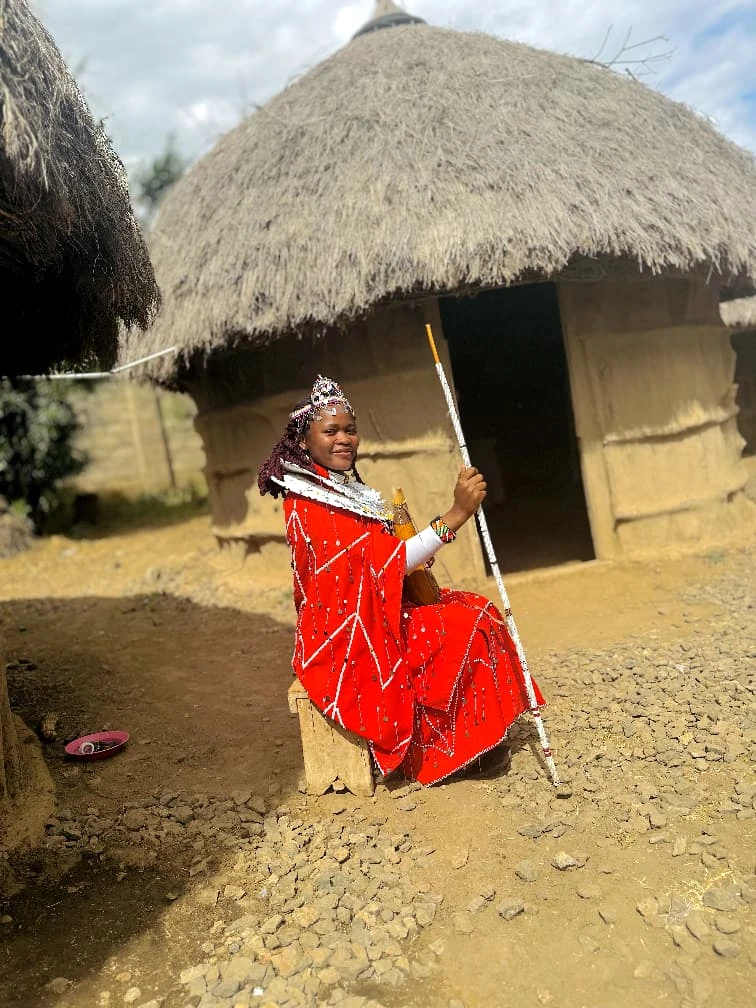
Long trousers or shorts? T-shirts or tops? Flip-flops or sneakers? Or maybe even hiking boots? Your trip is booked (or you are about to book it), and you’re standing in front of your closet, not knowing what to bring. Don’t worry, we’ve all been there.
Let’s start with some good news: most of what you need you probably already have at home. But of course you won’t pack your bag the same way whether you’re climbing Mount Kilimanjaro or making your way to the world-famous Zanzibar Island.
Tanzania weather differs from region to region – but there is always a great time to travel in Tanzania! Weather in the coastal areas is the hottest and most humid, while the North and highlands of Tanzania are cooler because of altitude. The temperatures vary between 22 °C and 31 °C throughout the year. During the night, the temperature in Tanzania drops to between 10 °C and 22 °C. The beaches of Zanzibar have a distinctively tropical climate, since it is located close to the Equator. On this page, you can read more about the weather in Tanzania .
It is advised to wear loose, comfortable, and easy-to-wash clothing. The idea is to bring only what you need because most camps and lodges will wash your clothes for little money. There is no need to dress up for safaris because they are casual – and even with your practical safari clothes, you’ll cut an Instagram-worthy figure!
Plan to wear layers so you can acclimatize to weather variations. Indeed, depending on the time of year, early morning game drives can be rather chilly while daytime temperatures can get quite warm. Instead of dark blue or black, which tends to draw tsetse flies, wear neutral or khaki-coloured clothing so that you blend right in. Sunglasses, insect repellent, sunscreen, and wide-brimmed hats are essential. It’s recommended that you wear long pants, long-sleeved shirts, socks, and insect repellent to prevent mosquito bites after dusk.
Here is a checklist of every piece of clothing you should take and what to wear on your Tanzania safari. So you can refer to it while you pack for your trip.
T-shirts and tank tops
Light long pants or convertible long-short pants
Warm fleece pullover or jacket
Bandana
Heavy sweater if travelling in the cold season
One swimsuit – for at the pool in your accommodation or at the beach
Cotton socks and underwear
Pajamas
One pair of comfortable walking shoes
One pair of sandals or flip-flops
Wide-brimmed hat
Sunglasses
Pack light when you travel to Tanzania, and only bring the most necessary. And should you forget something at home, you can probably get it there as well. Here are some extra essentials you can check off your list when packing for your vacation.
Documents, money, and other necessities
Credit cards and ATM bank cards
Yellow fever vaccination certificate, if necessary
US dollars in large and small bills
Passport
Plane tickets
Travel insurance policy
Emergency contact numbers
Safari itinerary
Small torch or headlamp
Camera, extra memory cards, batteries, and charger, if applicable
Ziplock bags for toiletries, camera equipment, snacks, and so on
Everything for your wellbeing
Sunscreen and lip balm
Insect repellent
Eye drops and extra contact lenses or spare glasses if necessary
Anti-bacterial hand sanitizer
Tissue paper and a small travel towel
Personal toiletries
First aid kit
Tylenol
Anti-malaria pills
Cold and allergy medicine
Itch medication
Stomach ache remedy
Antibiotic cream
Anti-diarrhoea medicine
Prescription antibiotic for travellers’ diarrhoea
Prescription medications
If you decide to explore Stone Town or any other part of Zanzibar other than the beach resorts, it’s best to dress modestly. Women shouldn’t dress in short skirts, thigh-high shorts, sleeveless shirts, or exposing shirts. However, Capri trousers or at least knee-length shorts, and of course long dresses and skirts are fine. For men, knee-length shorts or pants are appropriate.
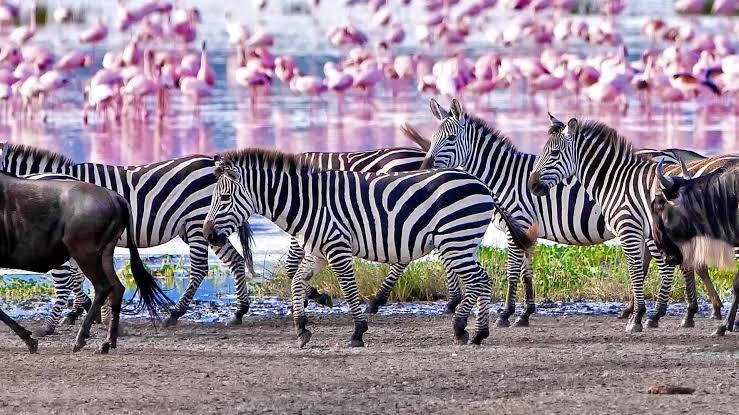
Can-brings for your beach holiday in Zanzibar
You already have your swimsuit in your suitcase, as well as sun protection, sunglasses and a fancy hat! Depending on how you want to spend your time on this almost-too-beautiful-to-be-true island, we have a few more tips on what to bring.
Journal – Write down what you’ve done, what you’ve seen and which animals you’ve met on your safari.
GoPro – If you want to go snorkelling or diving, this would be ideal to capture all the tropical fish you’ll encounter… figuratively, of course.
Book(s) – Imagine relaxing on the white beach with the sound of the waves and a good book in your hand… if you want to learn more about Tanzania, we can recommend these .
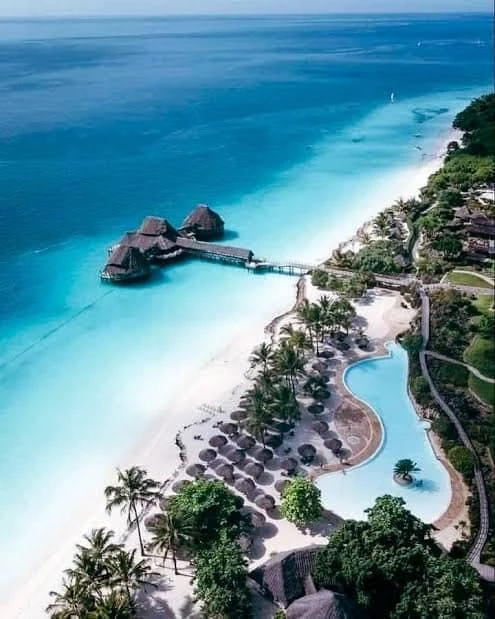
Headphones – Should you want to listen to your favourite music or podcast while chilling at the beach.
Should you want to add a Kilimanjaro trek on your list, have a look at here to find everything you need to know about the preparation and, of course, on what to pack!
Flights
Planning your journey to Tanzania starts with choosing the right flights. While we take care of all domestic flights within Tanzania as part of your safari package, you are free to select the international flights that best suit your schedule and preferences.
Yes, we can assist with booking international flights. However, these are not included in the price of our travel packages and are arranged on demand based on your preferred dates, departure airport, and airline. All internal flights within Tanzania are included in the package price and will be arranged for you as part of your itinerary.
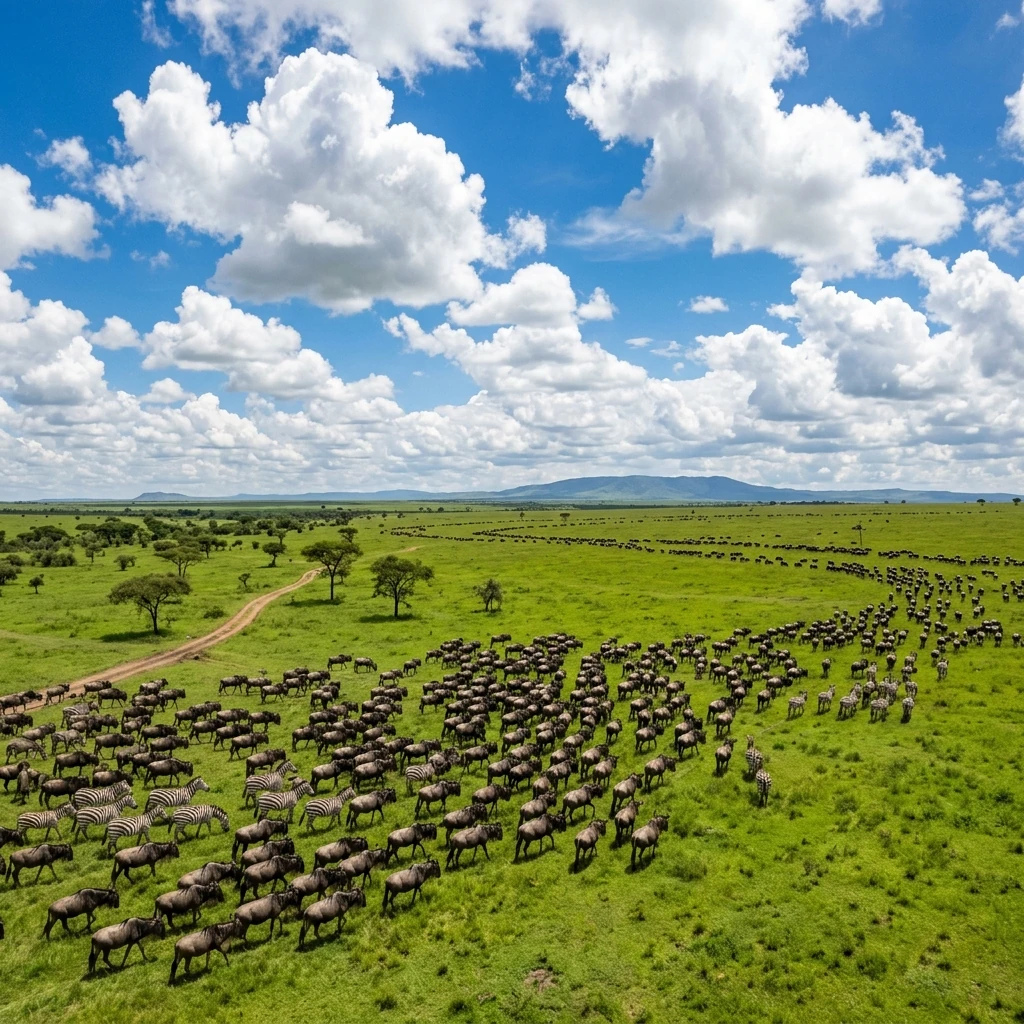
If you need some help in finding suitable international flights, our team is happy to help.
General info on Tanzania
You’re probably curious about the country you’ll soon be exploring. To help you get acquainted, we’ve gathered a few useful facts about Tanzania. From its currency and official languages to time zone and population – here’s everything you need to know before your adventure begins.
The local currency is the Tanzanian shilling. And even though dollars and euros are still used in the most touristic places, the only official currency is the Tanzanian shilling and should be used, especially for all your small expenses.
There are over 100 different languages spoken in Tanzania. The official languages, however, are Swahili and English. You can expect all your BlueGreen Tanzania Safaris guides and hosts to speak English, but if you’re looking to learn a few words of Swahili before your trip, check out our list of top 25 useful words in Swahili !
Swahili is spoken by almost everyone. In the tourism sector, however, English is widely spoken by the majority of people.
The population of Tanzania is almost 60 million. One of Africa’s most ethnically diverse countries, around 125 different ethnic groups live in Tanzania, with more than 100 different languages spoken nationwide.
The Tanzanian people are well-known for their hospitality, often warmly welcoming tourists to experience their beautiful nature, wildlife and culture. If you really want to learn more about the country and its culture, be open and talk to the locals.
Tanzania is GMT +3. To put that into terms we all understand, check out the time difference from Tanzania to LA, New York, London and more below.
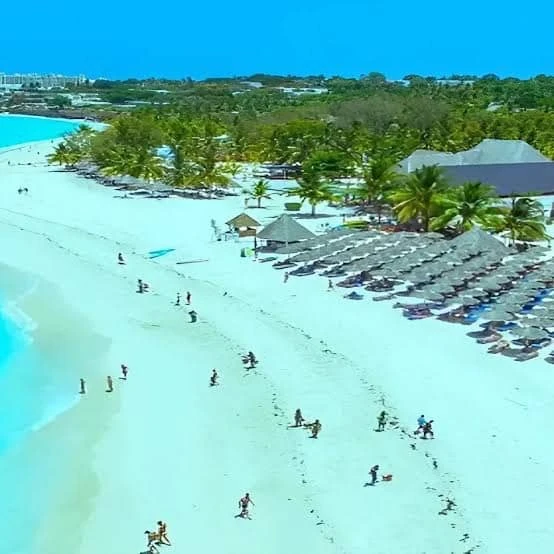
Los Angeles: -10 hours New York: -7 hours London: -3 hours Berlin: -2 hours Hong Kong: +5 hours Tokyo: +6 hours Sydney: +8 hours Auckland: +10 hours
Private Safaris
Most of our safaris are private and designed to give you the highest level of comfort, exclusivity, and flexibility. With your own vehicle and personal guide, you can fully enjoy the freedom to explore Tanzania at your own pace.
Yes, you will enjoy a private jeep and a dedicated guide, fully reserved for you. Unless you choose to join a safari in a small group , of course.
Absolutely. You’re free to tailor your itinerary, route, activities, and accommodations to match your interests, budget, and travel style.
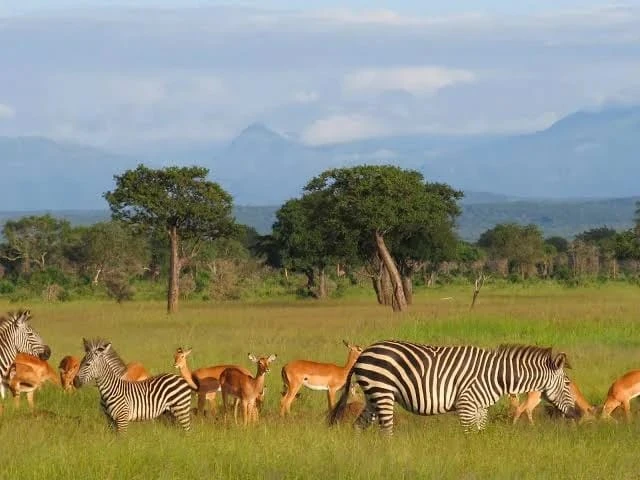
Yes, private safaris are perfect for couples, families, and anyone who wants to have a personalized experience.
Group safari
A small-group safari is a wonderful way to explore Tanzania’s breathtaking national parks while travelling with like-minded adventurers. With a limited number of participants, you’ll enjoy an intimate and well-organized experience at an attractive price. Below you’ll find a few key questions and answers about our small-group trips.
Our small-group safaris operate with a limited number of travellers (three to six people per jeep) to keep the experience personal and comfortable.
Yes, solo travellers are very welcome. Small-group safaris are a great way to meet new people while exploring Tanzania.
Yes, group safaris run on set departure dates to ensure smooth planning for everyone.
Accommodation, meals, park fees, guided game drives, and transportation during the safari are included.
A good night’s rest is essential during your safari, which is why we only work with handpicked, high-quality accommodations . All lodges and tented camps are checked regularly by our team, and we maintain direct partnerships to ensure the best service and value. From comfort lodges to luxury camps, each category offers its own level of style and amenities – so you can choose what suits you best.
We offer several categories, ranging from comfortable mid-range lodges to high-end luxury lodges and camps, so you can select the style that fits your preferences and budget.
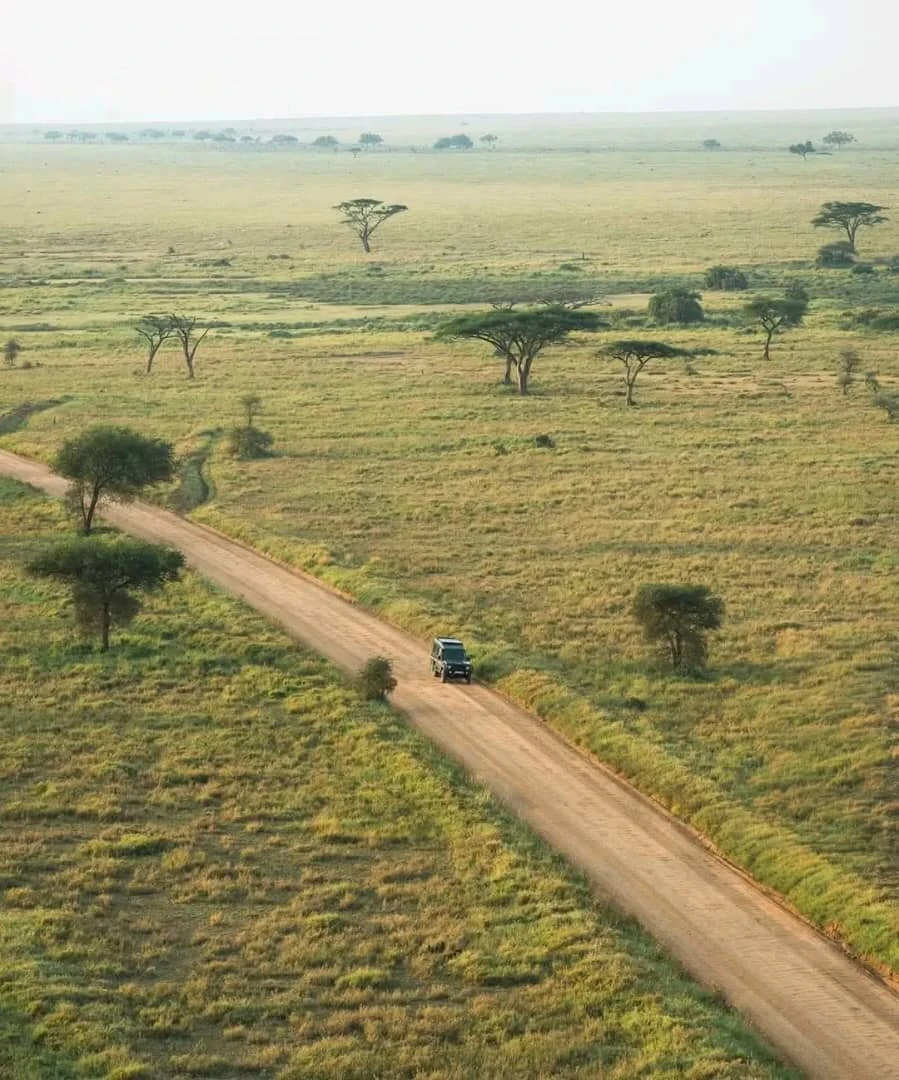
Our team personally visits and checks all accommodations on a regular basis to guarantee consistent quality and service.
Yes, we have direct partnerships with all accommodations we offer, ensuring smooth coordination and the best possible experience for our guests.
Food
Delicious and fresh meals are an important part of your safari experience. That’s why we carefully select accommodations and partners that offer high-quality, hygienic, and varied food options. Whether you prefer local Tanzanian dishes or international cuisine, you’ll enjoy tasty meals throughout your trip – with dietary needs accommodated on request.
You’ll enjoy a mix of international dishes and traditional Tanzanian meals such as grilled meats, vegetable stews, chapati, rice dishes, and tropical fruits.
Traditional Tanzanian food Tanzanian cuisine includes dishes like ugali (maize-based staple), nyama choma (grilled meat), samaki (fresh fish), pilau rice, and various vegetable stews – simple, flavourful, and often slow-cooked.
Traditional Zanzibar food Zanzibar is famous for its spices and seafood. Expect dishes with coconut, cardamom, cinnamon, and fresh fish, as well as Swahili classics like octopus curry, pilau, and Zanzibar pizza from local markets.
Yes. Vegetarian, vegan, gluten-free, halal, or other dietary needs can easily be arranged. Please just let us know in advance.
Absolutely. In Tanzania, the food is fresh and all meals are prepared in clean, well-maintained kitchens. We work only with trusted accommodations that meet high hygiene standards.
Guides
Your guide plays a major role in your safari experience – and that’s why we work exclusively with highly skilled, professional local guides. Born and raised in Tanzania, they know the national parks like no one else and are experts in wildlife behaviour, ecosystems, and tracking animals. Many of our guides speak multiple languages, including English, French, German, and Spanish, ensuring clear communication and an enjoyable experience for all travellers.
Our guides are experienced local professionals with deep knowledge of Tanzania’s wildlife, landscapes, and culture. A lot of them are also bilingual, which allows us to regularly match our guests with a guide speaking their language.
Many of our guides are multilingual and can communicate in English, French, German, and Spanish. Other languages can be requested, but only upon availability.
Yes, all guides receive extensive training in wildlife behaviour, driving skills, guest safety, and customer service.
Transfers & Pickups
From the moment you arrive in Tanzania, we make sure your journey is smooth and stress-free. All transfers and pickups – whether from the airport, your hotel, or between destinations – are fully arranged by BlueGreen Tanzania Safaris. Our team ensures punctual, reliable, and comfortable transportation, so you can focus on enjoying your trip.
Yes, all necessary transfers and pickups are arranged by BlueGreen Tanzania Safaris and included in your itinerary.
Absolutely. A member of our team will welcome you upon arrival and take you directly to your accommodation.
Yes, all inter-hotel and inter-park transfers are organized for you to ensure a seamless travel experience.
Extensions
Would you like to continue your adventure after your safari? BlueGreen Tanzania Safaris offers several exciting extensions to make your trip even more memorable. Whether you want to climb Kilimanjaro, relax on the beaches of Zanzibar, or explore nearby countries such as Kenya or Uganda or even South Africa (in collaboration with our sister company Africa Safari Trips ) – we can easily and happily arrange the perfect add-on to your itinerary.
You can extend your trip with a Kilimanjaro climb, a relaxing beach stay in Zanzibar, or even a visit to Kenya, Uganda or South Africa with our sister company, Africa Safari Trips .
Yes, you can mix and match extensions, for example ending your Kilimanjaro climb with a beach holiday in Zanzibar.
Absolutely. We take care of all logistics, including accommodations, transfers, activities, and regional flights if needed.
Best time to visit
- When to visit Tanzania?
- The best time to visit Tanzania depends on what you want to see, where you want to go, your budget, and your interests. Any time of year has its pros and cons. Here’s a guide to help you decide the best time for your Tanzanian adventure . Oh, and before we forget… everyone is different, which is why there is no correct choice. But one thing’s sure: Tanzania is beautiful the whole year!
- Below you can find some answers to frequently asked questions. For more detailed information, check out our article “ When is the Best Time To Visit Tanzania? ”
- June to October & December to February These months are the crème de la crème for visiting Tanzania! That’s why we rated them “Excellent”. Think of June to October as nature’s blockbuster season: sunny skies, wildlife galore, and the epic Great Wildebeest Migration. December to February is like hitting the safari jackpot, with lush green landscapes and adorable baby animals everywhere.
- But hey, March, April, May, and November are also cool to go – especially if you love vibrant greenery, bird-watching, and having the park almost to yourself. Yes, there might be some rain, but not all the time and it’s still a great time to visit Tanzania.
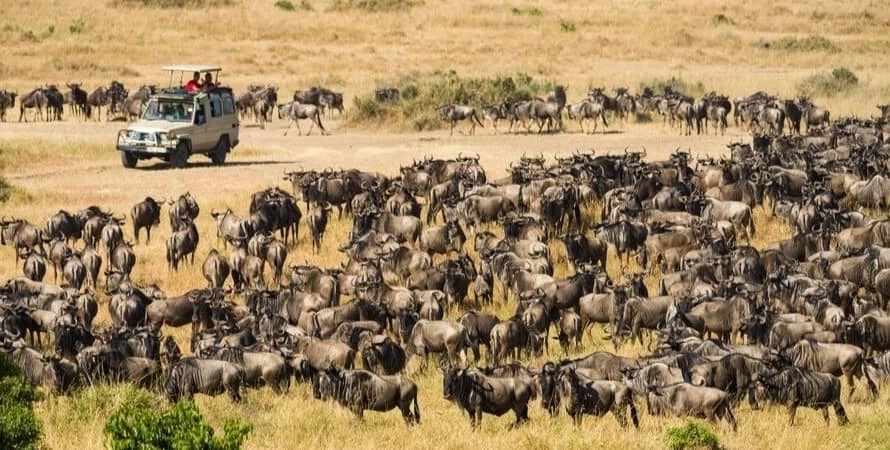
- Great news: You can witness the awe-inspiring Great Wildebeest Migration all year long as it moves between the Maasai Mara in Kenya and the Serengeti in Tanzania. No matter when you travel, you won’t miss this incredible event. Here’s a breakdown about when and where you can see the highlights, so you can choose what’s most important to you!
- Tanzania’s weather varies by region, but there’s always a great time to visit! The coastal areas are the hottest and most humid, while the northern regions and highlands are cooler due to their higher altitude. Temperatures generally range from 22 °C to 31 °C during the day, dropping to between 10 °C and 22 °C at night. Zanzibar’s beaches enjoy a distinctly tropical climate thanks to their proximity to the Equator.
- Tanzania has two seasons per year: the wet and the dry season . The wet season (also called the rainy season) runs from the end of October right through to December, and then again from the end of March to the beginning of June. They are referred to as “short rains” and “long rains”. These tropical rains mostly start late afternoon and continue all night till early morning. The rains of Africa are famous worldwide and are a soothing, enchanting sight to behold during a trip to Tanzania!
- Absolutely. In fact, National Geographic , Discovery and other major media companies choose the rainy season on purpose to shoot their wildlife documentaries in Tanzania. The weather is fantastic all year round and even though heavy rains persist most afternoons in the rainy season, the natural environment comes to life. Nature is colourful, the grass is lush and green, beautiful flowers grow, animals find plenty of food, temperatures are nice and cool and, better yet, the main highlights of Tanzania are far less crowded with tourists.
- Another benefit of travelling in rainy season is the lower costs of safaris and accommodation. The disadvantages? Some accommodations are closed, and sometimes the roads are in a poor condition. Fortunately, this mainly concerns the roads in the national parks in South Tanzania.
- For those travelling to Tanzania during the rainy season, the following national parks are open and ready for your visit: Serengeti, Ngorongoro Crater, Tarangire, Lake Manyara, Lake Natron and Arusha National Park.
- During the wet season, some national parks are better to avoid, such as Nyerere, Ruaha, Mikumi and Udzungwa. So if any of the latter destinations are on your must-do list in Tanzania, you’d better head out during the dry season.
- The rain turns the landscape green, which attracts a lot of animals. This means plenty of opportunities to spot wildlife at their finest – and happiest! During the rainy seasons, animals are more active, which makes for a fantastic safari experience. With an abundance of food and fresh water, animals roam in their thousands. The rain also protects the animals from the harsh heat of the sun.
- Many of our safari guests say that the rainy season offers a more intimate safari experience. For bird lovers, the rainy season is a fantastic time of year to visit Tanzania as lots of migratory birds arrive.
- For more detailed information on Tanzania weather and when you should travel to Tanzania, check out our page on the best time to visit Tanzania .
- Easy payments & safe
- Paying for your safari – it’s as easy as 1 – 2 – 3!
- When booking a safari, you want to focus on the joys of that experience. But before you can do that, you need to pay for your beautiful holiday plans. Here at BlueGreen Tanzania Safaris, we’ve tried to make the payment process as smooth as possible. How? Read on to find out!
- First: choose your payment method
- Since we have clients from different countries, we need to be as flexible as possible. That’s why we have a bank account in the Netherlands for bank transfers, but we also accept credit card payments / American Express / debit card payments (via iDeal, Bancontact, EPS, Giropay and Sofort, but not PayPal).
- Some people feel bank transfers are easier, whereas others prefer (credit) card payments for international transfers. In the end, it’s up to you.
- While bank transfers are common in some countries, and uncommon in others, we receive bank transfers from all over the world. As long as you have the details needed for an international or national transfer, it’s pretty straightforward and can usually be done online or in your banking app.
- When doing an international transfer, you need two important things: the IBAN of the receiving party, which is for example our bank account number written in the international standard. The second thing is the BIC/SWIFT code, which is the international code for your bank.
- When paying for your safari in Tanzania, you need the bank details listed below:
- Name of the bank: Rabobank
- Account holder’s name: BlueGreen Tanzania Safaris B.V.
- International bank account number: NL39 RABO 0308 5684 78
- (NL and RABO in letters, the rest in numbers)
- SWIFT / BIC Code: RABONL2U
- ( only the 2 is a number )
- Phone Number (if required):
- US: +1 (518) 634-1139
- NL: +31 174 35 2016
- FR: +33 257 28 0079
- DE: +49 408 7407061
- ES: +34 932 20 61 15
- Paying by (credit) card is fairly simple, as you just use the payment link you receive with our invoice. It’s good to keep in mind that we prefer you pay in euros and that all credit, debit, American Express and other direct card payments are charged a 2% fee for service costs.*
- Address details
- In some cases, address details are needed for payments. Please find the address of our office and bank below:
- Our office:
- BlueGreen Tanzania Safaris B.V.
- Soctratesstraat 1
- 2675XD Honselersdijk
- Holland / The Netherlands
- Chamber of commerce: 65050401
- VAT Number: NL 8559 61 351 B.01
- Our bank:
- Rabobank
- Croeselaan 18
- 3521 CB Utrecht
- * In some countries, these charges are against the (national) law. Unfortunately, we cannot make exceptions and have to charge the 2% fee for ALL card payments.
- It’s of the utmost importance to us that you know your money is safe when booking with us. This is why we are an active member of the SGR. This is a fund that provides a guarantee to protect customer payments for travel products purchased through its members.
- The SGR fund provides you with financial protection in the unlikely event of company insolvency. BlueGreen Tanzania Safaris B.V. is a fully accredited and bonded member, under member number SGR-3700. Our SGR Certificate can be viewed via this link: https://www.sgr.nl/accounts/tanzania-specialist-bv/
- Terms & Conditions
- We are dedicated to providing you with exceptional travel experiences and ensuring your journey is smooth and enjoyable. Before making a booking with us, you must ensure that you have carefully read and understood the following terms and conditions that govern our services. We are happy to answer any questions you may have.
- You can find them on our Terms & Conditions page.
- In addition to standard vaccinations such as MMR and TDP, the CDC and WHO recommend vaccinations for Tanzania, such as Hepatitis A, Hepatitis B, and typhoid. Yellow fever and rabies vaccinations are also recommended depending on the traveller’s activities.
- Tanzania yellow fever requirements can sometimes seem confusing, but we’re here to help! As a yellow fever-free country, Tanzania is safe to travel when it comes to steering clear of this virus. You may have more questions about it, so let’s answer them now.
- Yellow fever is a viral disease spread through mosquito bites. Symptoms of yellow fever typically take three to six days to develop and can include fever, chills, headache, and muscle aches. Yellow fever is serious: around 15% of people who get yellow fever develop a serious or life-threatening illness.
- As Tanzania is safe from yellow fever, there are no yellow fever vaccine requirements if you are directly travelling from Europe or from the United States.
- Great news: for the vast majority of travellers to this beautiful country, you do not need this vaccine ! According to the World Health Organization’s classification, Tanzania currently poses a low risk of yellow fever. If you reside in a country with no risk of yellow fever, then you don’t need the yellow fever vaccine as part of your necessary travel vaccinations.
- Proof of yellow fever vaccination is only required upon arrival if you come from a country with a risk of the virus. This list currently doesn’t include any country in Europe or in the United States. If you travel to Tanzania from a different country, check out the full list of yellow fever high-risk countries .
- An important note: if you’re transiting through one of the yellow fever high-risk countries for a period of twelve hours or more, you are required to receive the yellow fever vaccination. If this is the case on your trip to Tanzania, we strongly advise seeing your doctor and checking your Tanzania vaccination requirements with a healthcare professional before travelling.
- The yellow fever vaccination is given as a single dose and should be administered at least ten days before entering a high-risk yellow fever country. A single dose can provide life-protection against the yellow fever virus, so make sure you receive proof of vaccination from your doctor or health professional. If you are required to receive a yellow fever vaccine before travelling, you will also need to show your proof of vaccination upon arrival in Tanzania.
- Should your doctor recommend against the vaccine due to underlying health issues or other health-related factors, you can still travel to Tanzania with an official letter from the doctor . Showing it to the immigration officer upon arrival would waive the requirement, and your trip can go on as planned.
- Flying Doctors
- While planning your safari in East Africa, you might worry about having a medical emergency in the middle of nowhere. Luckily, the AMREF Flying Doctors are here to save the day, as they offer a flying ambulance service with doctors and pilots on standby 24 hours a day throughout East Africa. For 40 USD per person, you can travel worry-free to any remote area in one or more of the following countries for 30 days: Tanzania, Kenya, Uganda, Burundi, and Rwanda.
- In a medical emergency, Flying Doctors can give professional advice or immediately evacuate you to a hospital in Nairobi, Kenya. If, for example, through some bad luck you step on a snake in Kenya’s Masai Mara, you are just a phone call away from professional advice that might allow you to continue your journey.
- And if, by some freak accident, you badly break your leg while getting on a boat in Uganda’s Queen Elizabeth National Park, or a pre-existing medical condition suddenly causes trouble in the middle of Tanzania’s Serengeti National Park (knock on wood!), in no time a flight with a whole team of medical professionals can be waiting for you at the nearest airstrip. The team then takes you straight to the hospital in Nairobi, where further help will be available.
- Flying Doctors always assesses what help is needed and only covers the emergency assistance and transport. The costs of a visa (when coming from outside of Kenya and being flown to Nairobi), and the costs of the hospital and your treatment, are on you. It doesn’t replace the need for health and/ or travel insurance. AMREF Flying Doctors can help smoothen the process for the visa, however, making sure you reach the hospital in time.
- If you encounter a life-threatening situation while on Mount Kilimanjaro, Flying Doctors can arrange helicopter evacuations and fly you to a hospital in Moshi. Please note that the maximum landing altitude depends on weather, terrain conditions, and approximate weight-lift limits. More information about this can be found in their FAQs .
- Mount Meru climbs are NOT covered at all by the Flying Doctors Insurance. Therefore, please make sure that your travel insurance covers this type of evacuation.
- Your safety is our priority, which is why we gladly help you to take out the Flying Doctors Insurance. During the safari, we do our best to make sure everything goes well and 99 per cent of the time, our clients come back having had the best time of their lives.
- But it’s always good to realize you are travelling to a place of untamed nature, where wild animals rule and unexpected things happen. Flying Doctors have been flying since 1957 for that reason, allowing safari lovers to travel with complete peace of mind. Because we all like a bit of adventure – but not too much!
- Safety
- “I want to visit Tanzania, but is it safe?” Several of our clients ask that question while seeking Tanzania travel advice. The short answer? Yes! Tanzania is one of the safest destinations in Africa, with more than 1 million tourists visiting the country every year. When travelling with the travel experts at BlueGreen Tanzania Safaris, safety is paramount. Our private safari experiences with knowledgeable, professional guides enhance your experience in Tanzania and ensure your total peace of mind. Check out our Tanzania safety tips for more information on safe travel in Tanzania.
- Use reliable transportation
- First things first: when travelling through Tanzania, it’s very important to use reliable transportation. It’s one of the first steps you can take to ensure your safety while you explore. When you book with us, you don’t have to arrange this: our drivers and guides will bring you wherever you need to be! Oh, and common sense and listening to your gut feeling are helpful as well, of course.
- Keep valuables in a safe
- We recommend keeping all of your valuable items somewhere secure, such as in a safe when available. You can trust your guide – he will give you the best advice to keep your belongings safe.
- Wear simple clothing and jewellery
- Just like with all other places in the world, tourist destinations are known to be a hotspot for pickpocketing. That’s why it’s a good idea to opt for more simplistic clothing to ensure that you don’t get targeted. As we have already mentioned above, it’s best to keep your valuables, such as jewellery, stored in a safe while you’re out exploring.
- Stay in tourist-friendly areas
- If you want to be certain that you’re visiting the right (and safe!) locations, spend some time planning and doing some pre-trip research. Our travel consultants are here to help!
- Stay connected
- We’d advise you to stay connected for the entire duration of your trip. You should always have your mobile phone with you and inform your phone carrier about your trip so that you can use your mobile data as usual… or buy a local sim-card or an e-sim – even easier.
- During day trips, you might be away from your accommodation for a long time. This is where a power bank comes in handy. If you don’t have one, or you forget it in your hotel room, you can also charge your phone in our safari jeeps.
- Even though Tanzania is considered a safe place to visit, there are some places that we don’t recommend visiting – especially if you want to visit the country as a solo traveller.
- First, avoid visiting the deep south of the country, right next to the Mozambican border, since there have been relatively high crime rates recorded there in recent years. Luckily, the tourist attractions aren’t anywhere near this region of Tanzania, so there should be no reason for you to visit the far south of Tanzania.
- Our next safety tip: be vigilant while exploring the capital, Dar es Salaam. While this isn’t by any means a place that you should flat-out avoid, it is an area with a higher crime rate than other popular parts of the country, particularly when it comes to assault, vandalism, and theft.
- Responsible Travel
- Choosing to travel with BlueGreen Tanzania Safaris means choosing to travel responsibly, sustainably and safely in Tanzania. As a company, we care deeply about contributing to Tanzania’s social and economic development, and we participate in several initiatives to do just that.
- As a trusted travel company in Tanzania providing exceptional wildlife and nature experiences, we understand that the great wilds of Tanzania need protecting and preserving. That’s why we’re dedicated to sustainable business practices and actively contributing to environmental projects throughout the country.
- We do all kinds of things in the field of sustainability. Think of prioritizing carbon-neutral activities, planting trees and training vulnerable street children. You can read all about it on our responsible travel page .
- We’re proud to announce that we’ve officially achieved the Travelife Partner level – an internationally recognized status that reflects our long-term commitment to sustainability and corporate social responsibility.
- The Travelife Partner award is a globally recognized sustainability standard for tour operators. While it is not yet a full certification , it recognizes companies that have taken significant steps toward sustainable operations. To reach this level, we met over 100 criteria related to:
- Environmental protection and biodiversity
- Fair labor practices and human rights
- Sustainable office management
- Ethical partnerships with international suppliers
- Clear, honest communication with travellers
- The certification aligns with ISO 26000 standards for Corporate Social Responsibility, ensuring that every part of our operation, from office processes to on-the-ground experiences, is guided by ethical and sustainable practices.
- As Naut Kusters, Manager of Travelife for Tour Operators, puts it:
- “The Partner award of BlueGreen Tanzania Safaris will inspire other companies in Tanzania to follow the same path.”
- We’re truly honoured to lead the way on this journey toward full certification.
- When you book with BlueGreen Tanzania Safaris, you can trust that your travel experience contributes positively to the communities you visit and the environment we all share.
- Here’s what our Travelife Partner status means in practice:
- We promote fair working conditions and build strong, respectful relationships with local communities.
- We aim to minimize our environmental impact, from our office to the wilderness.
- We ensure our customers are informed and empowered to travel more sustainably.
- We partner only with companies and suppliers who share our values.
- Whether you climb Kilimanjaro , discover the Big Five on safari , or relax on the beaches of Zanzibar , every journey with us is designed with care, intention, and impact.
- Yes, we are continuing to strengthen our sustainability efforts with deeper environmental policies, ongoing staff training, external audits, and transparent impact reporting. Our ultimate goal is to achieve full Travelife Partner certification.
- Hakuna Matata Academy
- The Hakuna Matata Academy believes that knowledge is power. Launched in 2022, the HMA is an on-the-ground initiative created by the founders of BlueGreen Tanzania Safaris. Located next to their office in Arusha, HMA offers specialised hospitality training programs to both vulnerable street kids and professionals working in the hospitality and tourism sector. The Hakuna Matata Academy is the first of its kind in Tanzania.
- The Hakuna Matata Academy:
- Provides trainings and opportunities to vulnerable street kids
- Creates fulfilling career opportunities for Tanzanians in the growing tourism sector
- Provides extra trainings to guides about wildlife and professional customer service
- Promotes sustainable business practices throughout Tanzania for a healthy and happy country
- Stimulates economic growth through higher-quality services and professionalism in the travel and tourism sector
- Read more about the Hakuna Matata Academy .